
Introduction
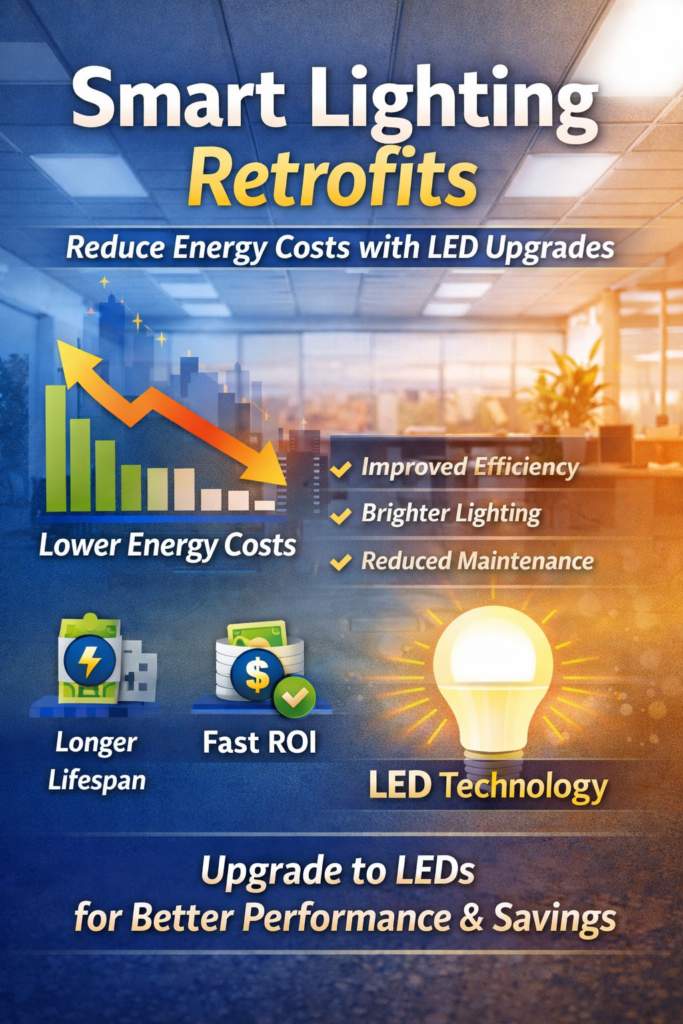
Lighting Retrofits are becoming a practical choice for modern facilities. Many organizations want to reduce costs. They also want to improve sustainability. Replacing old lighting systems with LED technology helps achieve both goals. Traditional systems, such as incandescent and fluorescent lights, use more energy. LEDs use far less power. They also last much longer. This makes them a smart long-term investment. In addition, LEDs improve lighting quality. They also reduce maintenance needs. As a result, Lighting Retrofits are now seen as a strategic upgrade rather than a simple replacement.
Why Lighting Retrofits Matter for Modern Facilities
Lighting Retrofits help organizations meet energy efficiency targets. Older lighting systems are often inefficient. They consume more electricity than needed. They also require frequent replacement. This increases both cost and effort. LEDs solve these issues. They use less energy while providing better light output.
Another benefit is their long lifespan. LED lights can last many years without replacement. This reduces maintenance work. It also lowers labor costs. LEDs also produce less heat. This helps maintain indoor temperature. It can even reduce cooling expenses. These combined benefits make retrofitting an important step for modern facilities.
Key Benefits of Lighting Retrofits with LED Technology
Lighting Retrofits provide several clear advantages:
- Lower energy consumption compared to traditional lighting
- Longer lifespan, reducing replacement frequency
- Reduced maintenance costs over time
- No harmful materials like mercury
- Zero UV emissions, improving safety
- Better lighting control with dimming and automation
- Improved brightness and visual comfort
These benefits make LED upgrades suitable for many environments. Offices, factories, and public spaces all benefit from this transition.
Cost Savings and Return on Investment
Lighting Retrofits offer strong financial value. The initial cost may seem high. However, the savings begin quickly. Energy bills drop as soon as LEDs are installed. Over time, these savings add up. They often recover the initial investment.
Maintenance costs also decrease. LEDs do not need frequent replacement. This reduces labor expenses. Facilities that run for long hours benefit even more. Consistent performance ensures fewer disruptions. In addition, many governments offer rebates. These incentives reduce upfront costs. This improves the return on investment. Overall, retrofitting becomes a cost-effective decision.
Steps Involved in Lighting Retrofits Implementation
Lighting Retrofits require careful planning. A structured process ensures better results:
- Perform a lighting audit to understand current usage
- Choose the right LED options for each space
- Estimate energy savings and financial benefits
- Check compliance with local regulations
- Plan installation to avoid disruption
- Test the system after installation
Each step is important. Proper planning ensures efficiency. It also helps achieve expected savings. Following the right process leads to long-term success.
Compliance and Government Incentives
Lighting Retrofits often qualify for financial support. Governments encourage energy-efficient upgrades. They offer rebates and grants for eligible projects. However, certain rules must be followed. Proper documentation is required. Approved products must be used. Installation standards must also be met.
Failing to follow these steps can lead to missed benefits. This is why planning is essential. Working with experienced professionals can help. They understand the requirements. They also ensure compliance. This makes it easier to access available incentives. It also ensures quality results.
Conclusion
Lighting Retrofits are a smart solution for energy efficiency. They reduce electricity use. They also lower maintenance costs. LEDs provide better performance and longer life. These advantages make them ideal for modern facilities. In addition, financial incentives improve affordability. Organizations can recover their investment quickly. With proper planning, the transition is smooth and effective. Lighting Retrofits are not just an upgrade. They are a step toward a more efficient and sustainable future.